

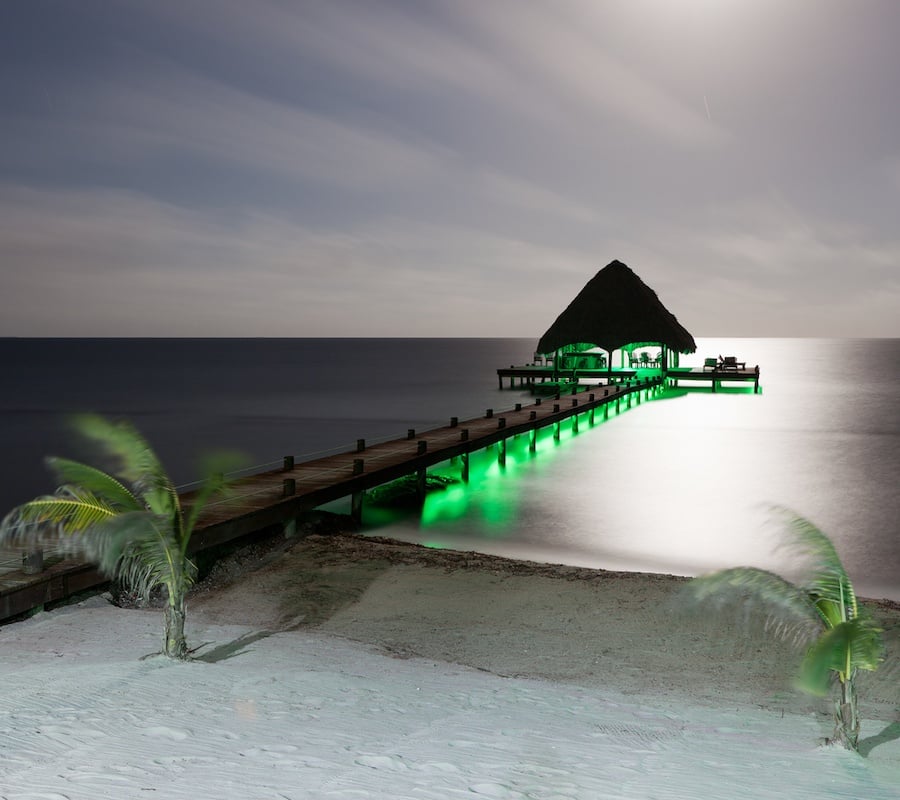
Underwater dock lights are almost always green because green light travels farther through water than any other color, and it triggers a natural food chain, attracting plankton, which draws bait fish, which in turn brings in larger game fish.
That's why, if you've ever walked a dock at night and noticed a glowing green ring in the water, you're not just looking at a design choice. You're looking at science.
Beyond the fish factor, green dock lighting also improves nighttime safety, boosts curb appeal, and adds real value to a waterfront property.
Here's why green is the industry standard, what other benefits it brings, and how to have it installed safely.
Related Blog: Why Boardwalks Are Important for Waterfront Properties and Marine Construction
Why Are Underwater Dock Lights Green?
The color isn't random. It comes down to how light behaves underwater and how marine life responds to it. A few key reasons green wins out:
- Deeper light penetration. Green sits in the part of the light spectrum that travels farthest through water before scattering or fading, so it stays visible at greater depths than red, yellow, or white light.
- Zooplankton attraction. Green light stimulates zooplankton activity, drawing these tiny organisms toward the light source.
- Bait fish draw. Zooplankton attracts bait fish looking for an easy meal, concentrating them in the lit area.
- Game fish activity. Bait fish, in turn, attract larger predatory fish, creating a visible, active food chain right under your dock at night.
Blue light is sometimes used in deeper saltwater applications because it penetrates even farther than green, but for most residential docks in shallower, calmer water, green offers the best balance of visibility, fish attraction, and value.
Other Benefits of Green Dock Lights
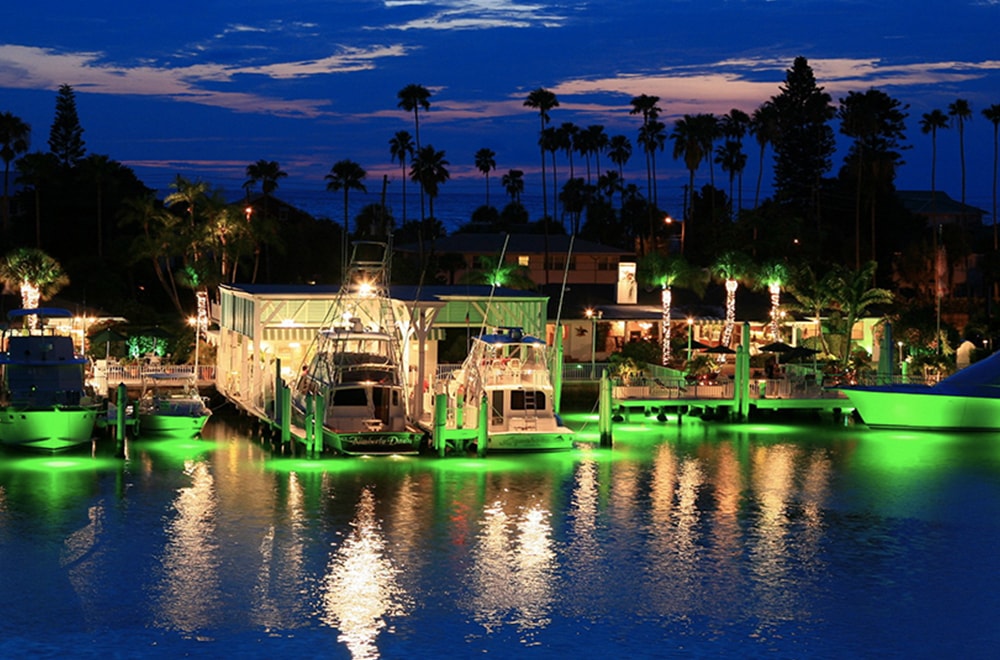
Fish activity is the headline reason, but it's not the only one. Homeowners who install green underwater lighting also gain:
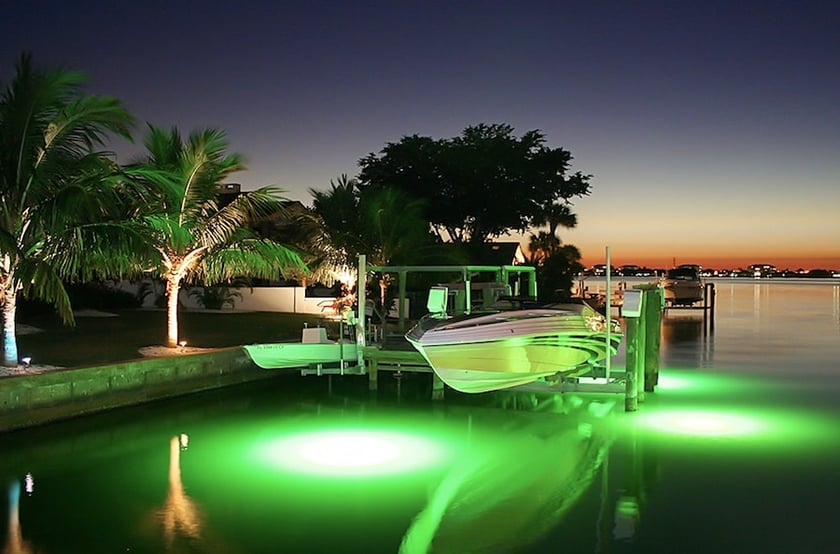
- Improved nighttime safety. Better visibility for boaters docking after dark and for anyone walking the seawall or dock at night.
- Enhanced ambiance. A soft green glow adds a resort-like feel to evenings on the water, with fewer boats and less activity than daytime.
- Increased property value. Underwater lighting is a distinctive feature that stands out to buyers and guests alike.
- Better wildlife viewing. Many homeowners enjoy watching manatees, fish, and other marine life gather in the lit water.
- A hands-on nature lesson for kids. A lit-up dock turns into a live aquarium at night, giving kids an up-close look at predator and prey fish in their natural habitat.
Getting the Most Out of Green Dock Lights for Fishing
A few quick tips to make the most of the food chain your lights create:
- Be patient. The food chain builds in stages, zooplankton first, then bait fish, then game fish, so give the light time to work before casting.
- Fish the edges. Larger, light-shy fish often hang at the perimeter of the glow rather than in the center.
- Go submersible. Underwater fixtures attract far fewer bugs than floating lights.
How to Install Green Dock Lights Safely
Underwater lighting means running electrical current near water, which makes professional installation essential. This isn't a project to DIY. A few things to consider before installing:
- Bulb type. LED fixtures are brighter, more energy-efficient, and longer-lasting than traditional bulbs.
- Marine-grade, rugged fixtures. Lights should be rated for continuous underwater use, resistant to saltwater corrosion, and durable enough to handle tidal shifts, bumps from fish, and underwater debris.
- GFCI-protected, enclosed outlets. All wiring and outlets should be ground-fault protected and properly enclosed to prevent shock hazards.
- Professional wiring and permitting. Marine electrical work often requires permits and should always be handled by a licensed marine electrician.
- Ongoing maintenance. Fixtures should be inspected periodically for corrosion, water intrusion, or wiring wear.
Duncan Seawall's in-house electrical division specializes in marine lighting installation, so your dock lights are installed to code and built to last in a saltwater environment.
Frequently Asked Questions
Why are dock lights green instead of another color?
Green light travels farther through water than most other colors and attracts zooplankton, which draws bait fish and larger fish, making it the most effective and popular color for underwater dock lighting.
Do green dock lights really attract more fish?
Yes. The green glow kicks off a food chain effect: zooplankton gather first, bait fish follow, and predator fish show up to feed, often making green-lit docks a great spot for nighttime fishing.
Can I install dock lights myself?
It's not recommended. Underwater electrical work carries real safety risks and often requires permitting, so installation should be handled by a licensed marine electrician familiar with local codes.
Are green dock lights permitted in Florida waterways?
Requirements vary by county and HOA, so it's best to check local permitting rules or work with a marine contractor who can confirm what's required for your property before installation.
Do dock lights work in both saltwater and freshwater?
Yes, green lights perform well in both environments. In deeper or murkier saltwater applications, some installers pair green with blue lighting for added depth penetration.
Should I choose submersible or floating dock lights?
Submersible lights are generally the better choice, since the light stays below the surface, it attracts far fewer bugs than a floating light, making for a more comfortable night on the dock.
Ready to light up your dock and bring your waterfront to life after dark at Duncan Seawall? Contact us to talk with a marine electrician about safe, professional underwater lighting installation.