

Investing in boat docks and decking that look good and preserve the integrity of your waterfront home will increase your property value, as long as you take care of it properly. Materials for decks are now available in a variety of colors and composites. But which is the best? Which one is the best for your home? Sometimes the initial cost is justified by the sustainability and low maintenance offered by different deck types.
Related Blog: Annual Inspection Checklist for Seawalls, Docks & Boat Lifts
Choosing the right deck material also depends on how much ongoing maintenance you are willing to take on. Some materials need regular sealing or staining, while others only require occasional cleaning to stay in good condition.
Pressure-Treated Wood
This is a favorite because it costs less up front. Other woods, like cedar and redwood, require regular cleaning, sealing, and should be re-stained every 2-3 years.
-
Clean regularly to remove dirt, moisture, and buildup
-
Seal or stain as needed to help protect against weathering
-
Check for splintering, warping, or soft spots over time
Tropical Hardwood
This wood is almost breathtaking in beauty and can also be more expensive. Regular cleaning/finishing, and re-staining or re-oiling every 2 years is recommended.
-
Maintain the wood’s natural appearance with regular cleaning
-
Re-oil or re-stain to preserve color and durability
-
Watch for fading or surface wear from sun and saltwater
Composite Decking
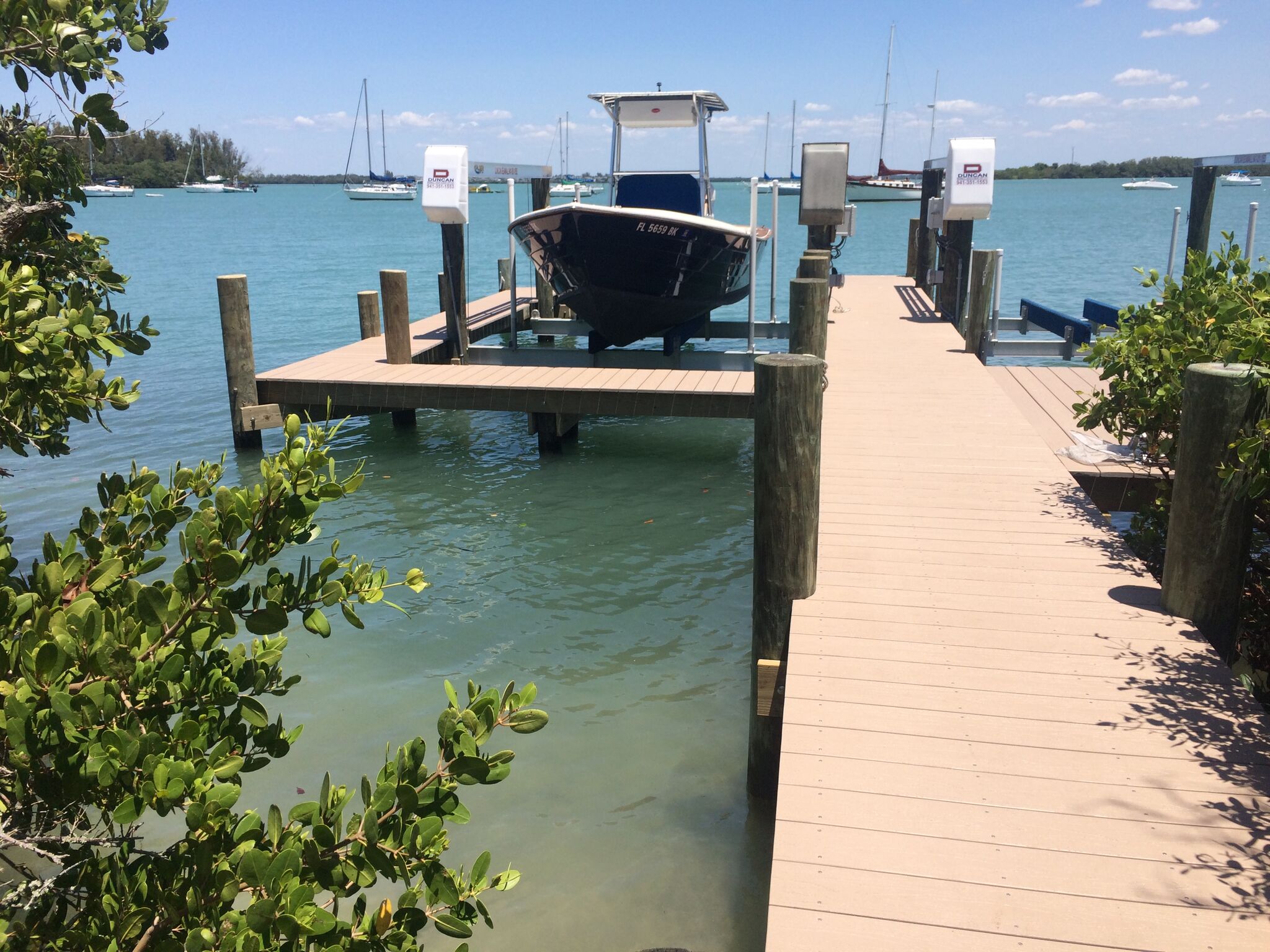
Your options increase every year with composite decking. It has the look of wood with the maintenance and stain-resistance of plastic, plus it readily stands up to Florida’s extreme weather. Composite decking should be cleaned every 2 years.
-
Clean with mild soap and water
-
Avoid harsh chemicals or aggressive pressure washing
Recycled Plastic Lumber
Plastic that has been recycled is a sustainable choice and it’s a low-maintenance option; cleaning is recommended every 1-2 years.
-
Rinse to remove dirt and salt residue
-
Check fasteners and connections during maintenance
-
Ideal for homeowners wanting minimal upkeep
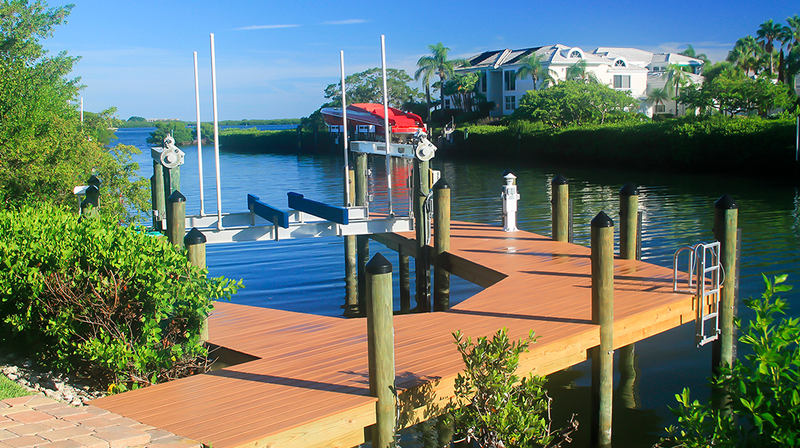
Sustainable, Low-Maintenance Deck Material
Today’s property owners want decks that look good while offering durability and sustainability. At Duncan Seawall, Dock & Boat Lift we are experienced in all areas of dock and deck construction and understand which materials offer the best long-term performance.
That’s why we often recommend Trex® decking. With a 25-year guarantee, it’s the best choice for responsible boaters who want to spend more time on the water than maintaining their decks. It’s made of 95% recycled wood, sawdust, and plastic and offers a wide variety of beautiful colors that can enhance your exterior or become a focal point for your waterfront property.
Expert Guidance for Your Dock and Decking Needs
Taking a proactive approach to material selection and maintenance can help extend the life of your dock, improve safety, and protect your investment for years to come. Whether you’re building a new dock or upgrading an existing one, choosing the right decking is one of the most important decisions you can make for your waterfront property. At Duncan Seawall, Dock & Boat Lift, we’re here to help you choose the right materials and maintain your waterfront property with confidence. Contact us today to learn more about dock and deck solutions tailored to your needs.
Frequently Asked Questions
How often should a dock or deck be cleaned?
Most dock and deck materials should be cleaned at least once a year, depending on weather, saltwater exposure, and use.
What is the best deck material for a waterfront property?
The best option depends on your budget, style, and maintenance preferences, but composite and recycled materials are often strong choices.
Why is deck maintenance important?
Regular maintenance helps protect your investment, improve safety, and extend the life of your deck or dock.
Is composite decking better than wood for docks?
Composite decking is often a better long-term option for docks because it resists moisture, rot, and sun damage while requiring less maintenance than traditional wood.